
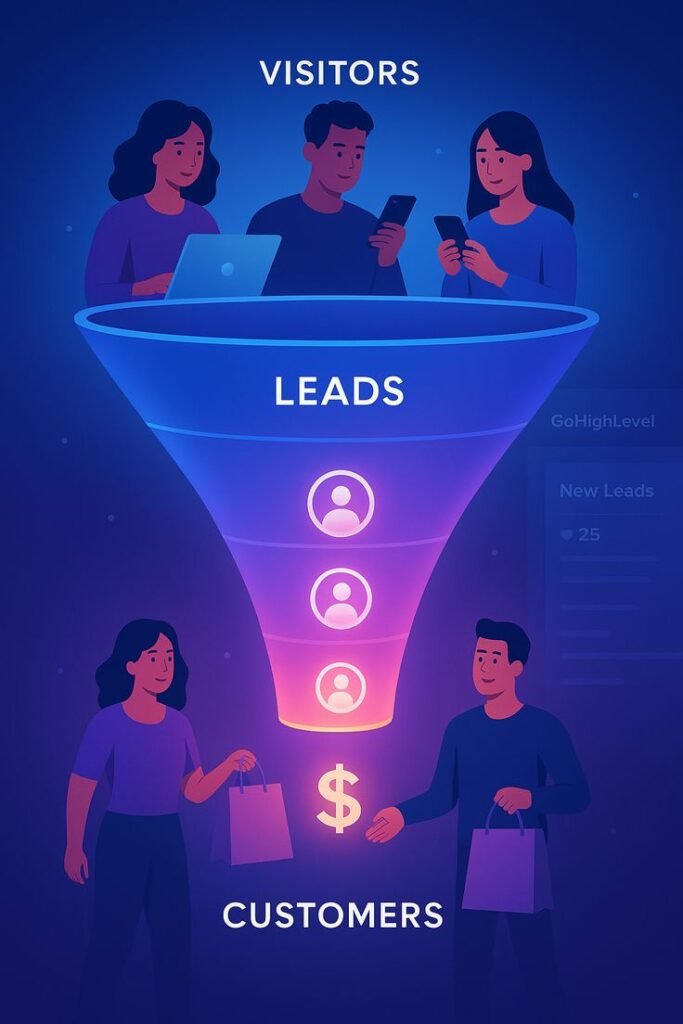
Getting people to visit your website is only one part of digital marketing. The bigger challenge is guiding those visitors from their first interaction with your brand to becoming paying customers.
This is where a digital marketing funnel comes in.
A well-designed funnel helps businesses attract the right audience, build trust, generate leads, and ultimately increase conversions. Whether you run a small business, startup, e-commerce store, or service-based company, understanding how to build a digital marketing funnel can make your marketing efforts more organized and measurable.
In this guide, we’ll explain what a digital marketing funnel is and how to build one from scratch.
What Is a Digital Marketing Funnel?
A digital marketing funnel is a step-by-step journey that describes how a potential customer moves from discovering a business to taking a desired action, such as making a purchase.
A typical funnel can be divided into four main stages:
- Awareness
- Interest
- Consideration
- Conversion
Some businesses also include Retention and Advocacy after the purchase.
The basic journey looks like this:
Strangers → Visitors → Leads → Customers → Repeat Customers
The goal isn’t simply to push people toward a purchase. Instead, the funnel should provide the right information and experience at each stage of the customer’s journey.
Step 1: Define Your Target Audience
Before creating your funnel, you need to understand who you’re trying to reach.
Start by identifying:
- Age and location
- Industry or profession
- Interests
- Common problems
- Purchasing behavior
- Goals and motivations
- Budget
- Preferred communication channels
You can create a simple customer persona to organize this information.
For example:
Target customer: Small business owner
Problem: Struggling to generate online leads
Goal: Increase qualified enquiries
Potential solution: SEO and digital advertising services
The more clearly you understand your audience, the easier it becomes to create relevant marketing messages.
Step 2: Set a Clear Funnel Goal
Your funnel should have a specific objective.
Depending on your business, the goal could be:
- Generate leads
- Sell a product
- Book consultations
- Get demo requests
- Increase newsletter subscriptions
- Promote a free trial
- Encourage app downloads
Avoid trying to achieve everything with one funnel.
For example, if you’re creating a funnel for a consulting business, your primary goal might be:
Website visitor → Free consultation booking → Paying client
A clear goal makes it easier to measure performance.
Step 3: Attract the Right Audience
The first stage of the funnel is awareness.
At this point, people may not know your business yet. Your job is to attract people who could eventually become customers.
You can use:
Search Engine Optimization
Create useful content around questions and problems your target audience is searching for.
Examples include:
- How to improve website traffic
- How to generate leads online
- Digital marketing tips for small businesses
Social Media
Share educational and engaging content through platforms where your audience spends time.
Paid Advertising
Search and social advertising can help you reach specific audiences and promote relevant offers.
Content Marketing
Blog posts, videos, guides, podcasts, and other content can introduce potential customers to your brand.
At this stage, focus on providing value rather than immediately asking people to buy.
Step 4: Capture Leads
Once people discover your business, the next goal is to turn some of those visitors into leads.
You can do this by offering something useful in exchange for contact information.
Examples include:
- Free e-books
- Checklists
- Templates
- Webinars
- Free consultations
- Product demos
- Free trials
- Discount codes
For example:
Blog post: How to Improve Your Website SEO
Lead magnet: Free SEO Website Checklist
CTA: Download the Free Checklist
The visitor provides their email address and becomes a lead.
Step 5: Create a High-Converting Landing Page
Your landing page is an important part of the funnel.
A good landing page should clearly explain:
What you’re offering
Tell visitors exactly what they will receive.
Why it matters
Explain the benefit of taking action.
Why they should trust you
Use testimonials, reviews, case studies, certifications, or other relevant trust signals.
What they should do next
Include a clear call to action.
A simple landing page structure could be:
Headline → Problem → Solution → Benefits → Social Proof → CTA
Keep unnecessary distractions to a minimum.
Step 6: Nurture Your Leads
Not every lead is ready to buy immediately.
Lead nurturing helps you build a relationship with potential customers over time.
Email marketing is one common method.
A basic sequence could look like:
Email 1: Deliver the promised resource
Email 2: Provide a useful educational tip
Email 3: Explain a common problem
Email 4: Introduce your solution
Email 5: Share a customer success story
Email 6: Present an offer or consultation
The content should remain relevant to the customer’s needs and stage in the buying journey.
Step 7: Convert Leads Into Customers
Now you need to make it easy for qualified leads to take the next step.
Depending on your business, that could mean:
- Buying a product
- Booking a consultation
- Requesting a quote
- Starting a trial
- Scheduling a demo
- Contacting your sales team
Make the process simple and provide the information customers need before making a decision.
Address common questions about:
- Pricing
- Features
- Benefits
- Delivery
- Support
- Returns
- Guarantees, where applicable
Step 8: Focus on Customer Retention
The funnel shouldn’t end after the first purchase.
Existing customers can be valuable for repeat purchases, referrals, and long-term relationships.
You can improve retention through:
- Follow-up emails
- Customer support
- Loyalty programs
- Educational content
- Personalized offers
- Product recommendations
- Feedback surveys
A simple post-purchase journey might look like:
Purchase → Onboarding → Support → Follow-up → Repeat Purchase
Step 9: Turn Customers Into Advocates
Satisfied customers may recommend your business to others.
Encourage advocacy by providing a good customer experience and making it easy for customers to share their experiences.
You can request:
- Reviews
- Testimonials
- Referrals
- Case study participation
- Social media mentions
Customer-generated content can also provide useful social proof for future prospects.
Step 10: Measure Your Funnel
A funnel isn’t complete until you can measure how well each stage performs.
Important metrics include:
| Funnel Stage | Example Metrics |
|---|---|
| Awareness | Reach, impressions, website traffic |
| Interest | Page views, engagement, content downloads |
| Lead Generation | Form submissions, email sign-ups |
| Consideration | Demo requests, consultation bookings |
| Conversion | Sales, conversion rate, revenue |
| Retention | Repeat purchases, customer retention |
| Advocacy | Reviews, referrals, testimonials |
Don’t focus only on traffic.
For example, 10,000 visitors with 20 leads may be less valuable than 2,000 highly relevant visitors generating 100 leads.
Example of a Simple Digital Marketing Funnel
Let’s say you run a digital marketing agency.
Your funnel could look like this:
Step 1 — SEO Blog
Create an article titled:
“10 Digital Marketing Strategies for Small Businesses”
↓
Step 2 — Lead Magnet
Offer:
“Free Digital Marketing Strategy Checklist”
↓
Step 3 — Landing Page
Visitors enter their email address to download the checklist.
↓
Step 4 — Email Nurturing
Send useful marketing tips and relevant case studies.
↓
Step 5 — Consultation
Offer a free strategy consultation.
↓
Step 6 — Sales
Present a suitable digital marketing package.
↓
Step 7 — Retention
Provide ongoing reporting, support, and optimization.
This creates a structured journey from search visitor to potential customer.
Common Digital Marketing Funnel Mistakes
1. Targeting Everyone
A funnel designed for everyone often connects with no one particularly well.
Define a specific audience.
2. Asking for a Sale Too Early
Someone who has just discovered your brand may not be ready to buy.
Build awareness and trust first when appropriate.
3. Having Too Many CTAs
Multiple competing calls to action can make the next step unclear.
Give visitors a clear primary action.
4. Ignoring Mobile Users
A significant portion of web traffic can come from mobile devices, so your landing pages and forms should work well on smaller screens.
5. Not Following Up With Leads
A lead who doesn’t buy immediately isn’t necessarily a lost customer.
Relevant follow-up can help maintain the relationship.
6. Not Measuring Results
Without tracking, you won’t know where potential customers are dropping out of your funnel.
How to Build Your First Funnel
If you’re starting from scratch, keep it simple.
Start with this framework:
1. Choose a target audience
↓
2. Define one business goal
↓
3. Create useful content
↓
4. Offer a lead magnet
↓
5. Build a landing page
↓
6. Capture leads
↓
7. Nurture leads
↓
8. Make a relevant offer
↓
9. Measure conversions
↓
10. Optimize the funnel
You don’t need a complicated marketing system to get started. A simple funnel that is measured and improved over time can be more useful than a complex funnel that isn’t properly managed.
Conclusion
Building a digital marketing funnel from scratch is about creating a clear path between your audience’s needs and your business’s solution.
Start by understanding your audience, attract relevant visitors, provide valuable content, capture leads, nurture relationships, and make it easy for qualified prospects to become customers.
Once your funnel is running, use data to identify where visitors are dropping off and continually improve those stages.
A successful digital marketing funnel isn’t just about getting more traffic. It’s about turning the right traffic into meaningful business results.
Frequently Asked Questions
What is a digital marketing funnel?
A digital marketing funnel is a framework that represents the stages a potential customer moves through, from discovering a business to becoming a customer and potentially returning or recommending the business.
What are the main stages of a marketing funnel?
Common stages include awareness, interest, consideration, and conversion. Many businesses also include retention and advocacy.
How do I create a digital marketing funnel?
Start by defining your target audience and business goal. Then create content to attract visitors, capture leads, nurture prospects, make an offer, and measure the results.
What tools are needed to build a marketing funnel?
Depending on your strategy, you may need a website or landing-page platform, analytics, email marketing software, a CRM, advertising platforms, and tools for creating content.
How long does it take to build a digital marketing funnel?
A basic funnel can be created relatively quickly, but improving its performance requires ongoing testing, measurement, and optimization.